
Network Security Monitoring with Full Packet Capture
SentryWire delivers enterprise-grade network security monitoring built on continuous full packet capture, recording every packet at 10Gbps+ (up to 1Tbps) and retaining it for months or years, on commodity hardware at 25–40% less than legacy platforms. Security teams get defensible, packet-level visibility for threat detection, incident response, and compliance, long after logs and flow data have aged out.
Why Network Security Monitoring Requires Full Packet Capture
Modern networks generate enormous volumes of network traffic, much of it encrypted. Traditional security monitoring approaches rely on logs, flow data, or host-based alerts without packet evidence, creating visibility gaps that delay threat detection and limit investigations.
Network security monitoring based on full packet capture eliminates those gaps by capturing every packet, session, and protocol, enabling security teams to:
Perform continuous monitoring of network activity
Detect lateral movement, command-and-control (C2) beaconing, data exfiltration, and DNS tunneling with greater accuracy
Validate intrusion detection alerts with packet-level evidence
Investigate security incidents long after they occur
Meet compliance and audit requirements with defensible data
For organizations where security monitoring must be accurate, auditable, and long-term, packet-level visibility is foundational.
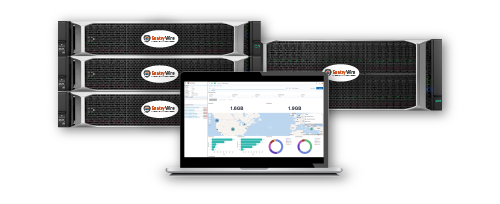
How SentryWire Delivers Network Security Monitoring
Network security monitoring is the continuous analysis of network traffic to detect threats — including lateral movement, ransomware, insider activity, and advanced persistent threats (APTs), identify unauthorized access, and support incident response and compliance requirements.
Effective security monitoring depends on high-fidelity network data that reflects what actually occurred on the network — not summaries, samples, or inferred behavior.
SentryWire enables network security monitoring by capturing complete packet data that supports:
Incident response and forensic investigations
Alerts mapped to MITRE ATT&CK tactics and techniques
Network forensics and evidence preservation
ICS / OT security monitoring for critical infrastructure environments
Full packet capture complements the tools security teams already run, SIEM platforms like Splunk and Elastic, intrusion detection engines like Suricata and Zeek, and NDR and HIDS solutions, by providing the authoritative source of truth they all depend on: the packets themselves.
How Network Security Monitoring Tools Compare
Logs, flow data, and alerts tell security teams that something happened. Only full packet capture preserves what actually crossed the network, the evidence needed to confirm a threat, investigate it, and reconstruct it.
Challenges in Modern Network Security Monitoring
Visibility Gaps from Flow-Only and Log-Based Security Tools
Logs, flow records, and alerts provide indicators — not evidence. Without packet data, security teams lack the visibility needed to fully understand network activity, confirm threats, or reconstruct events.
Limited Retention for Security Investigations
Many security monitoring tools retain data for short periods, preventing investigation of slow-moving threats like APT campaigns, insider activity, and ransomware staging, or breaches discovered weeks or months later.
Performance Limitations in High-Volume Networks
Legacy packet capture and intrusion detection systems struggle to keep pace with enterprise-scale network traffic, resulting in dropped packets and incomplete monitoring.
Compliance and Audit Risk
Regulated organizations must demonstrate continuous monitoring, accurate detection, and forensic readiness. Incomplete network data increases audit risk and regulatory exposure.


SentryWire’s Network Security Monitoring Capabilities
Complete Packet-Level Network Visibility
SentryWire captures all network traffic across your entire network, enabling continuous security monitoring and eliminating snapshot-based blind spots.
Threat Detection and Alert Validation
Security teams validate alerts from intrusion detection engines like Suricata and Zeek, and from SIEM platforms like Splunk and Elastic, using raw packet evidence, improving detection accuracy and reducing false positives.
High-Performance, Scalable Architecture
Built on commodity hardware, SentryWire sustains 10Gbps+ packet capture (scaling to 1Tbps) across enterprise and federal environments, without the cost or performance constraints of proprietary hardware systems.
Incident Response and Network Forensics
Full session reconstruction, file carving, and payload inspection enable precise investigation of security incidents, suspicious activity, and potential breaches.
Long-Term Packet Retention
SentryWire retains full packet data for weeks, months, or years — meeting compliance and forensic requirements and enabling retrospective investigation of incidents discovered long after they occurred.
Integrated Visualization and Analysis
Built-in modern visual analysis tools help security teams quickly surface C2 beaconing, data exfiltration, insider threats, and abnormal network behavior across large volumes of packet data.



Why SentryWire for Network Security Monitoring
SentryWire is built for organizations that require continuous, defensible network security monitoring backed by full packet capture. By preserving complete network traffic with long-term retention, SentryWire supports accurate threat detection, incident response, and forensic investigations at enterprise scale.
Designed for federal agencies, critical infrastructure operators, and regulated enterprises, SentryWire supports compliance-driven security monitoring aligned with frameworks such as OMB M-21-31, CDM, NERC-CIP, SOC 2, and SEC 17a-4, ensuring audit-ready visibility that remains effective for years, not quarters.
FAQs
-
Network security monitoring focuses on continuous threat detection, unauthorized access identification, and forensic readiness using packet-level data. Network troubleshooting tools focus on short-term performance issues and lack the depth required for security investigations.
-
Full packet capture preserves complete network traffic, enabling accurate threat detection, investigation of suspicious activity, and validation of security incidents that cannot be confirmed using logs or flow data alone.
-
SentryWire enables security teams to reconstruct sessions, analyze payloads, and investigate malicious activity directly from packet data, even months after an incident is identified.
-
Yes. SentryWire analyzes encrypted traffic using metadata, session behavior, JA3 hashing, and traffic patterns to identify suspicious activity and encrypted stream IOCs without requiring decryption. Complete packet data is retained for deeper inspection when decryption is available.
-
Yes. SentryWire is designed for ICS and OT environments where continuous monitoring, availability, and compliance are critical, supporting long-term visibility without disrupting operational systems.
-
Network security monitoring in federal, defense, and regulated environments must align with frameworks including OMB M-21-31, CDM, NERC-CIP, HIPAA, and SEC 17a-4. SentryWire supports these mandates by retaining complete packet data over extended timelines, providing the defensible, audit-ready network evidence these frameworks require.
-
NDR platforms detect threats by analyzing behavioral signals and generating alerts but do not retain raw packet data. Network security monitoring backed by full packet capture preserves the complete packet record that NDR relies on for alert validation, forensic investigation, and retrospective analysis — making the two complementary rather than interchangeable.
-
A SIEM aggregates and correlates log data from across an environment to generate alerts and support reporting. Network security monitoring backed by full packet capture works at the network layer, preserving the actual packets behind those alerts. The two are complementary: when a SIEM flags an event, packet data lets analysts confirm what really happened, investigate it, and reconstruct the session, evidence a SIEM's log summaries can't provide on their own. SentryWire forwards packet metadata and full PCAPs to SIEM platforms like Splunk and Elastic to close that gap.
-
Intrusion detection and prevention systems like Suricata match traffic against known signatures and either alert on or block recognized threats. They're effective against known attacks but blind to novel or unsignatured activity, and they don't retain the underlying traffic. Network security monitoring with full packet capture preserves the complete packet record, so teams can validate IDS/IPS alerts with hard evidence and investigate the threats signatures miss — making packet capture the source of truth an IDS or IPS depends on.
-
EDR and XDR detect threats from the endpoint outward, using agents installed on hosts. They're strong on endpoint behavior but limited to devices that run an agent — leaving unmanaged systems, IoT, OT, and network-only activity unmonitored. Network security monitoring with full packet capture sees everything that crosses the wire, regardless of whether an endpoint agent is present. Used together, EDR/XDR and packet capture let analysts pivot from an endpoint alert directly to the network evidence behind it to confirm scope and preserve a defensible record.
See SentryWire Network Security Monitoring in Action
Free, 60-Minute Demo
Get a tailored walkthrough of SentryWire's network security monitoring, full packet capture, real-time filtering, long-term retention, and integrations with Splunk, Elastic, Suricata, and your existing SIEM/IDS stack.
✓ Free, no obligation
✓ 60 minutes, tailored to your environment
✓ Response within 1–2 business days